
Edição 03 · 28 de julho de 2026
A performance review shouldn't be an annual event
Chris Gerlach · Co-Founder e CEO, Comp · ~7 min de leitura
Original thinking on AI-Native HR, for the CHROs and CEOs deciding what AI does inside their company.
Editorial
The traditional performance review rests on a shaky foundation. It runs on a manager's memory of someone's year, written down the week the form is due, and treats that memory as the official record, even though it is one of the least reliable inputs a company has.
I'd go further. The annual review survives because, until very recently, the two things it assumes were basically true, that a manager's memory was the best available evidence of how someone worked and that performance could only be judged at scale on a calendar. AI breaks both at once, and so performance management should stop being an event and become part of the work itself.
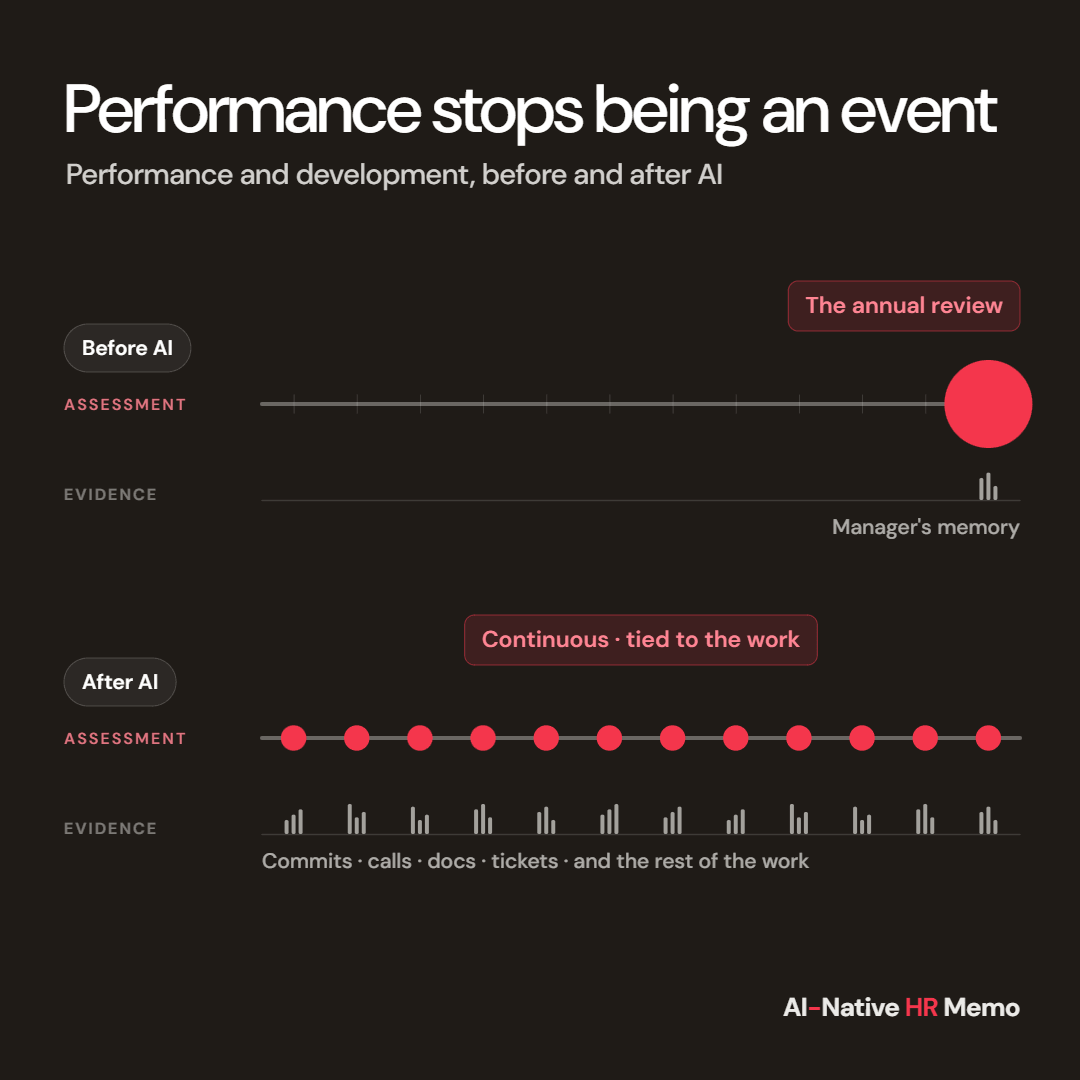
Start with the evidence. The vast majority of what an organization produces is unstructured, and that is often where the truth about performance lives. The commits and code reviews, the call recordings, the documents shipped, the tickets closed, the Slack thread where someone quietly unblocked a teammate, etc. The old review ignored all of it and ran on a manager’s rough summary. When a model reads the work directly, the evidence shifts from what a manager remembers to what the person actually produced.
Then, once the evidence changes, the calendar follows. Reviews attach to real milestones (a launch, a quarter of quota, a project delivered) and feedback arrives while it can still change the outcome. The dreaded once-a-year conversation quite often turns into a summary of feedback that already happened. And promotion-readiness can be checked whenever it matters, instead of argued once a year by whoever speaks most convincingly in the room.
Also, there is a quieter win that I think matters most, and it is fairness. A single manager’s rating carries that manager’s blind spots and recency bias. Reading and reconciling many independent signals is the most reliable way we know to correct for that. A wider base of evidence is simply a fairer one.
We have been running performance this way at Comp for a while.
There is one risk I would not publish this without naming. Reading someone’s work continuously, artifact by artifact, can easily slide into surveillance. What keeps it on the right side is what the system is allowed to read, what it is told to ignore, and whether the employee sees the same view their manager does. Get that wrong and the fairness gain becomes a collapse of trust (worse than the annual review you were trying to replace).
To be clear: none of this removes the human in performance review. Someone still decides! When a manager edits the summary the system drafted, that edit should feed back as a signal that teaches the system what good work looks like in that company. And this makes next year’s review better than this one’s. And when it works, managers stop rebuilding the case from memory and spend that time with the person instead.
Next in this series, the same lens on another HR subfunction.
Once again, let us know what you thought of this piece. The newsletter compounds when you do.
Hope you enjoy what follows,
Chris Gerlach · Co-Founder & CEO, Comp
Spotlight
Gustavo Victorica · Co-founder & COO, RecargaPay
Fintech · Pagamentos · 500+ FTEs · São Paulo
Na RecargaPay, o RH é “people operations” e responde ao Gustavo, COO. Com a AI assumindo a execução, o que ele passou a cobrar do time é o discernimento de saber o que o negócio precisa.
“In the end it's about ownership, but ownership of the outcome. Execution with AI has become trivial. You can prompt something and a product will come out. But what you put into that prompt, how you iterate, what you distill from your knowledge, what the actual need of the business was, that's the hit or miss.”
Gustavo Victorica · Co-founder & COO, RecargaPay
Com a execução ficando barata, a régua dos times passa a ser o julgamento sobre o que pedir e o que o negócio de fato precisa.
Leituras
O que vale ler antes da próxima edição
Substack · Ensaio · 21/Jul
Against Claudefishing
O Substack vai passar a sinalizar “texto provável de AI”, e o Dan Hockenmaier (CSO da Faire) prevê que em 12 meses a maioria das empresas terá políticas formais “anti-slop”. Acreditamos que a regra escrita pesa menos do que aspectos culturais de ownership, em que quem produz assume o resultado, com a AI ajudando com primeiros rascunhos e a pessoa dona da versão final. É o mesmo julgamento humano que está no centro do editorial.
Mercer · Relatório
The Early Career Paradox
As empresas AI-Native têm um org chart mais sênior, com mais engenharia (50,7% contra 38,2%) e uma base júnior mais fina, segundo o CEO da Pave. Pra Mercer, com a AI absorvendo a tarefa de entrada, o júnior lida com trabalho de peso cedo e com menos gente pra ensinar, e só 34% se sentem incentivados a aprender no expediente. Essa base sempre foi onde a empresa formava seus futuros líderes; então, para quem constrói RH AI-native, a dúvida que fica é de como formar os futuros líderes nesse cenário.
Demo
Quando o contexto vira eficiência no RH
 Assistir · vídeo
No vídeo, o Pedro Bobrow (co-founder e CHRO da Comp) resolve um pedido de férias e uma inclusão de dependente em plano de saúde na hora: a AI cruza saldo, política, prazo e documento, propõe a saída e leva pro gestor aprovar. E cada aprovação vira contexto pra próxima sair melhor.
Featured
Da Comp: pra estar na sala (e pra rever depois)
Eventos ao vivo e materiais pra revisitar.
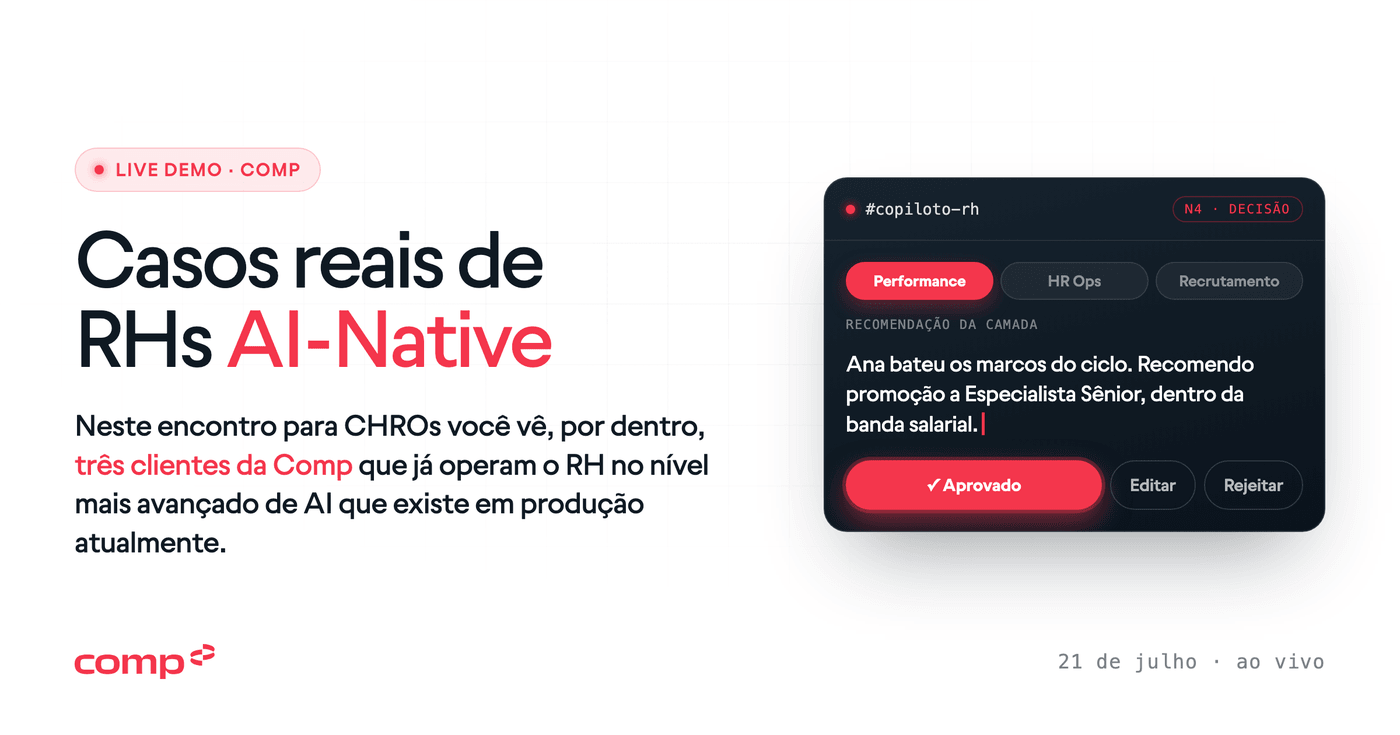
Casos reais de RHs AI-Native
Pedro Bobrow (Co-founder & CHRO da Comp) percorre três operações de RH rodando AI-Native em nível N4: recrutamento numa scale-up (~500 pessoas, de 29h para 6h de trabalho manual, turnover involuntário de 18% para 8%), performance contínua num unicórnio (2.000 pessoas, quase 100% das avaliações completas) e HR Ops numa enterprise (5.000+, operacional de 50% para 7% do tempo). Com Q&A.
Assistir à gravação →Jantar fechado · 05/Ago · São Paulo
CHROs in AI dinner · com Gianpiero Sperati (Creditas)
Jantar fechado na Comp House com Gianpiero Sperati (Director of People & Performance da Creditas) e Guilherme Tomazin (Comp), reunindo ~30 CHROs em torno de AI no RH. Vagas limitadas, peça a sua (sujeito a aprovação).
Café da manhã fechado · 07/Ago · São Paulo
CHROs in AI breakfast · com Daniel Campos (Sem Parar Corpay)
Café da manhã fechado na Comp House com Daniel Campos (CHRO da Sem Parar Corpay) e Filipe Ducas (Comp), com conversas sobre AI para o RH entre ~30 CHROs. Vagas limitadas, peça a sua.
Artigo
Ser AI-Native de fato: o que muda quando o RH para de automatizar
Cobertura da fala do Pedro Bobrow no Humanship MeetUp, na Casa Comp: ser AI-Native é repensar se o processo deve existir, antes de automatizá-lo, e desenhar o RH a partir do colaborador que o usa, em vez de otimizar para o próprio departamento.
Podcast
Rethinking People #2 · Antonio Salvador (InterCement)
Novo episódio do Rethinking People com Antonio Salvador (CHRO da InterCement) sobre levar AI pro RH de uma multinacional industrial, fora do circuito tech.
That's issue three.
If it earned your time, forward it to one person who should be reading along.

Continue na Memo
Edição 02 · 13 de julho de 2026
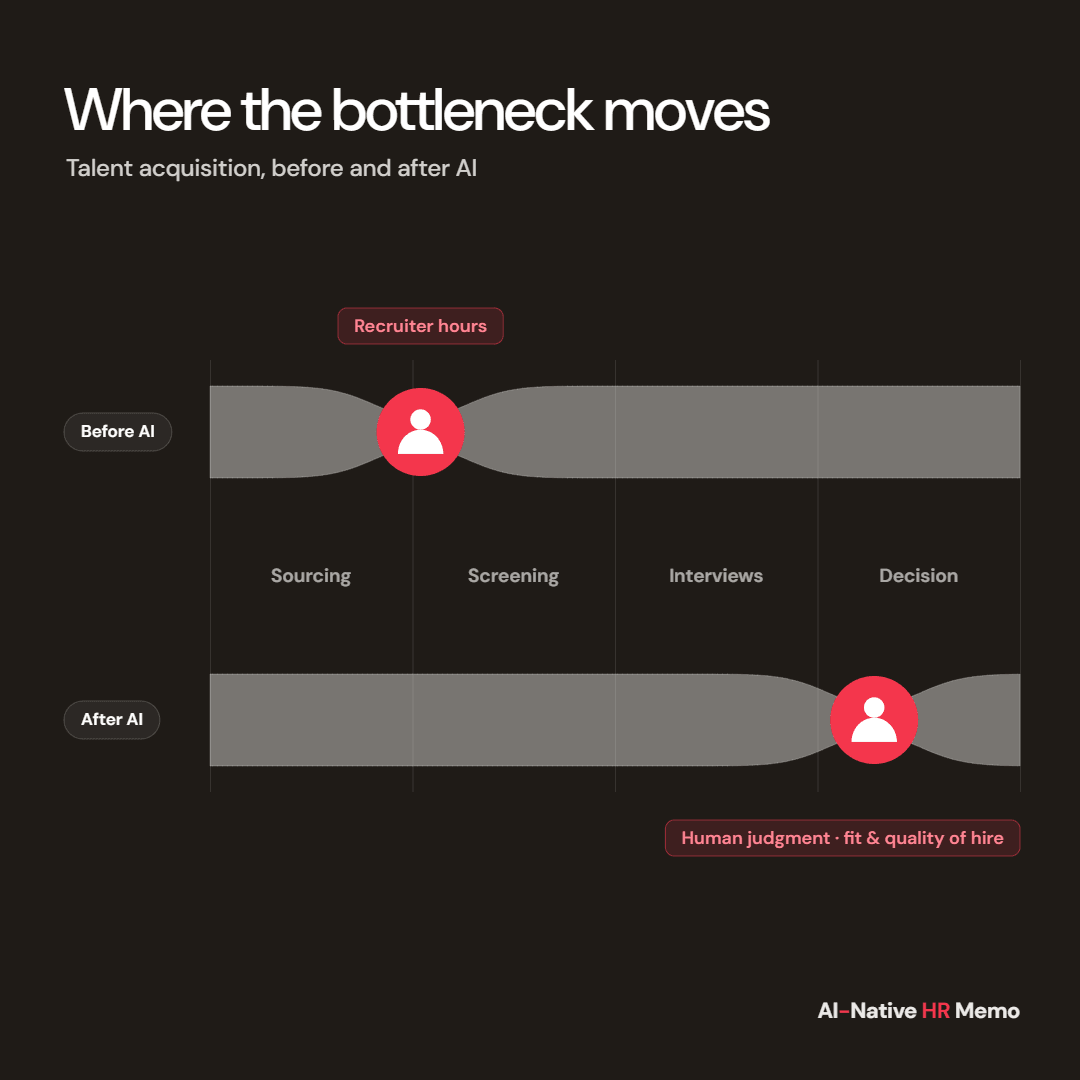
What AI actually changes about hiring
Quando sourcing e triagem custam quase nada, o gargalo do recrutamento se desloca pro julgamento sobre fit e quality of hire. A mesma lente aplicada à contratação.
Ler edição
Edição 01 · 22 de junho de 2026
AI changes what HR is made of
Quando a inteligência fica barata e contínua, quatro constraints que definiram o RH por décadas se dissolvem. A tese que abre a Memo.
Ler edição